Some new developments and theories with Mac Caolain after turning up a lot of information worthy of noting.
I had figured for a while that the modern "Keelan" anglicization, as it was also noted to be a variant of the Oriel sept
Ó Céileacháin had become so very conflated with
Ó Caoláin (Breifne-Meath), that it wasn't worth really analyzing the original population via 1901 census because it would be impossible. But finding some odd coincidences with data that the scholars gathered made me want to look into it. Woulfe in his second edition of Irish names in 1923, adds the variant Keallain to his entry for
Ó Caoláin so he likely came across the same things I did as it pertains that that vowel swap in the
long-A syllable.
However as I feel I overturned just about everything, the evidence for an Ó-prefix to this surname really seems insignificant to the amount of references to a
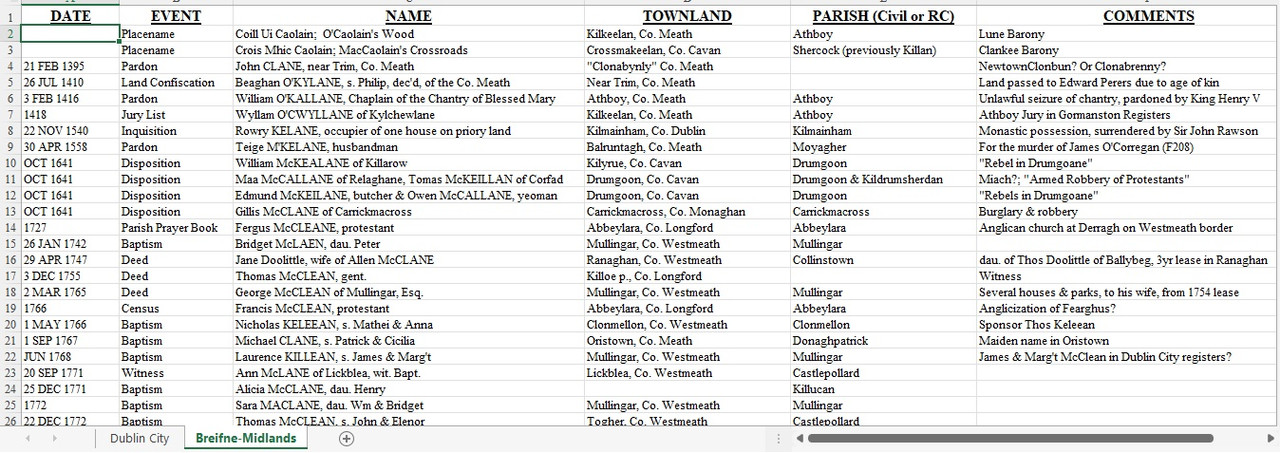
Mac-prefix. Aside from the records plotted below, the only other time I've definitively found this name with an Ó-prefix is a 1410 chancery roll entry for a Beaghan O'Kyllane, s. of Philip who d. near Trim, Co. Meath, and his land was confiscated by a local Anglo-Norman lord.
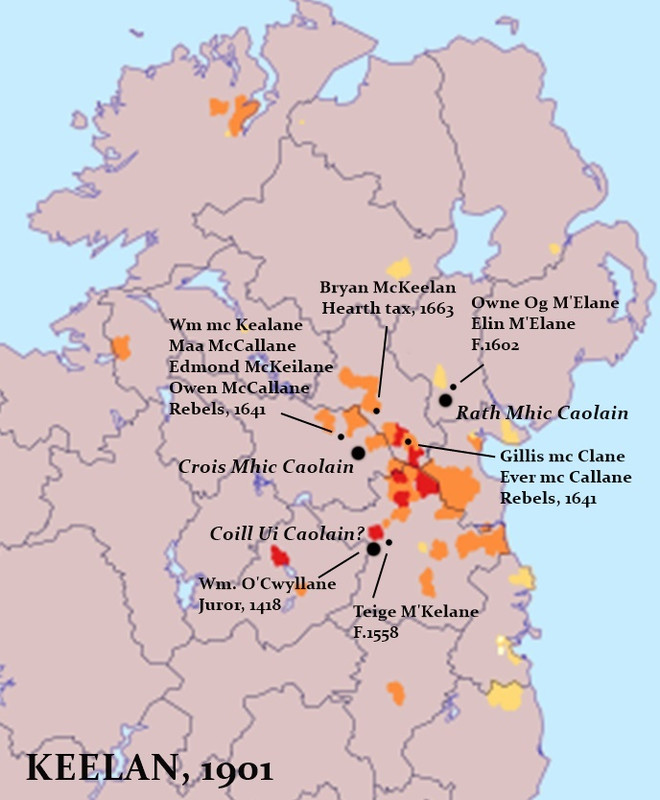
The Wm O'Cwyllane in Kilkeelan, Co. Meath, although he appears with an Ó-prefix in 1418, is adjacent to the Fiant of Teige M'Kelane in Balruntagh, and it could be that this surname in it's entirety was originally Mac Caoláin, with an alias arising of Ó Caoláin very scattered. So Kilkeelan (
Coill Ui Caolain) may really be
Coill Mhic Caolain. The townland Rathkeelan (
Rath Mhic Caolain) near Crossmaglen, Co. Armagh could support the 1602 pardoning of the two kerns named M'Elane ("of the Fews"), as Mac Caoláins. I did find that the townland Ballykeelan ("Ballymakelan") in Co. Kildare that I had mentioned in an earlier post, was really very likely
Baile Mhic Fhaelain as it lie within the O'Fhaelain's lands pre-invasion. A Mac-alias of this name would anglicize Mac'eelan.
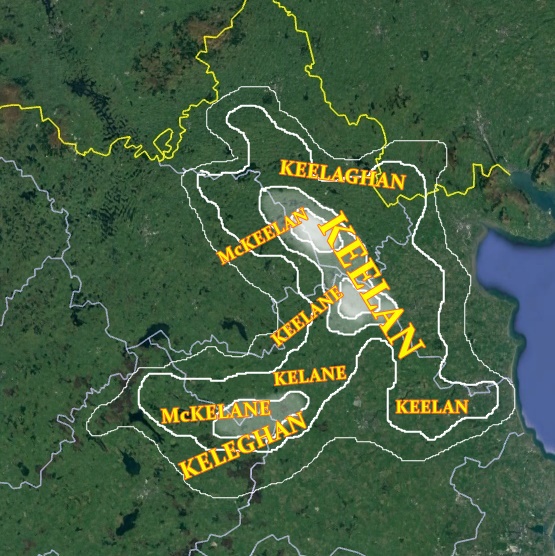
The population density of KEELAN seems to be centered in Ardagh parish, Co. Meath, which borders Cavan, Monaghan, and Louth. It is Drumlin-country and would have been under the sway of Ui Ruairc pre-invasion, as Ui Ruairc did set up a stronghold near present-day Slane on the River Boyne (It seems the north side of the Boyne was firmly in Breifne hands for most of it's run to Drogheda before 1171). However, this area, along with the tuath of Fidh na Saithne which was occupied by the Clann Chaoich O'Reillys (Clankee by.) c.1300 was once firmly under the control of the Airghialla. So the origin of this surname is questionable, as it could already have been in this area.
This brings me to my next point of interest: MacLysaght wrote
"KEELAN: Woulfe gives Ó Caoláin, treating it as an almost obsolete Meath name. It is, I suggest, an abbreviation of Keelahan,Kealaghan: Ó Céileacháin, an Oriel sept, who were chiefs of the Ui Breassaill, whose name has often been changed to Callaghan by attraction; it occurs with prefix Mac in Westmeath."
Well this certainly piqued my interest, as Keleghan 133269 not only shares rare markers with me, but the geographic coincidences are uncanny. A farming population of Keleghans occur in the Westmeath parish which borders Kilkeelan, Co. Meath and he also has two Braswell matches within BY38401 which we have been unable to explain. David has pointed out the flaws in BigY and that there are several portions of the Y-Chromosome not being tested.
Broken genealogies would be the only way to explain it, but it wouldn't be unbelievable to think that BY38401 could be Airghialla names, and that FT130287, which looks to have some relation to Clann Chaoich, also have an Airghialla branch.
This is proving very interesting.

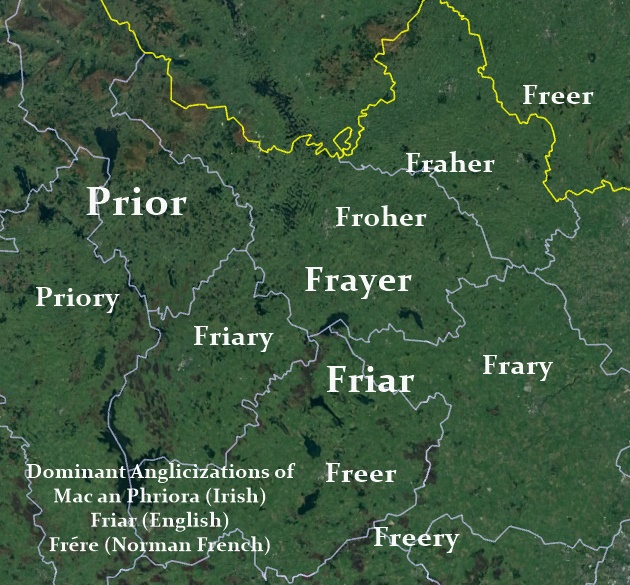
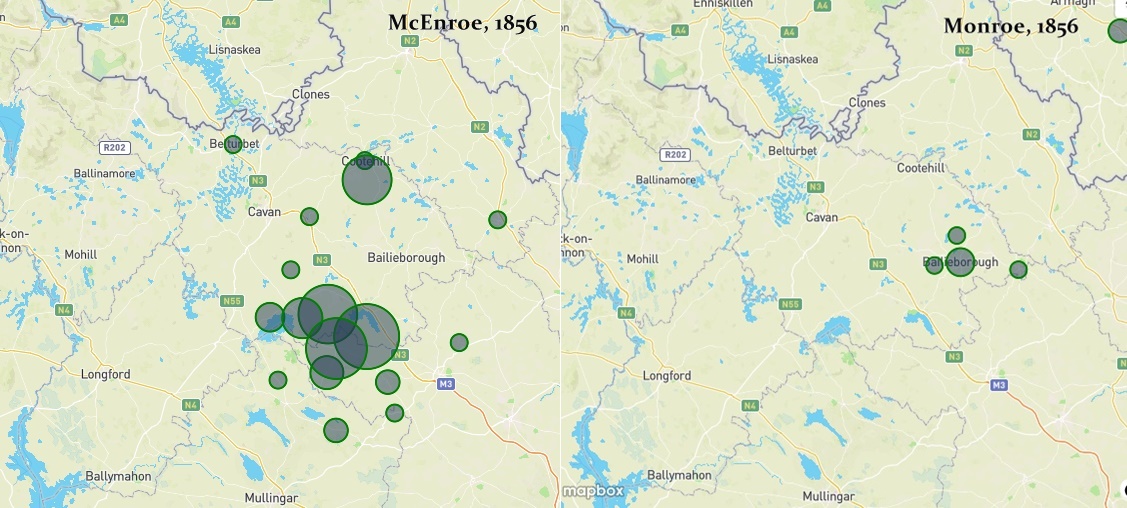
 visualizing this stuff helps me a lot more than staring at endless lines of names, dates and places). It also helped me understand the geography much better and the history of various baronies/tuaiths. Dont neglect the big towns though, because there were some tough decades where Dublin city had a cost of living half of that in Cavan & Meath, prompting a huge temporary inflow of rural folks, particularly tradesmen. You could find your ancestors as more or less "urban refugees" during tough times, which may reveal a decade of existing parish registers or directory entries. Mullingar was a fairly big town and has some records going back to the 1760s, and was a dawn-to-dusk walk from Eastern Cavan.