Re: A5902+ Group Update
Posted: Thu, 2023-Feb-16 3:20 pm
Thanks David, that's pretty fascinating! I havent delved much into the very early (Conn of the Hundred Battles-era) connections but that's very interesting about the DF27 specifically from that area on the mainland. About to go off topic myself  - There was also a large Neanderthal population holdout around the Iberian peninsula that lasted quite a long time after the rest of the population died out, and its a strange concidence to me that
-it was a celtic stronghold prior to the migration into the british isles
-the celtic people seem to have a higher percentage of neanderthal traits (fair skin, blue eyes, red hair, stout, cold-adaptations to name a few)
-Genome-wise I carry close to 5% neanderthal, while the average individual of 100% N. European ancestry has 1%, so Ive wondered if during the Bronze age, the celtic people that were pushed to the western coast of Europe had absorbed whatever people that earlier had absorbed the Neanderthals. Maybe it's just an oddity with me as opposed to the whole Irish diaspora.
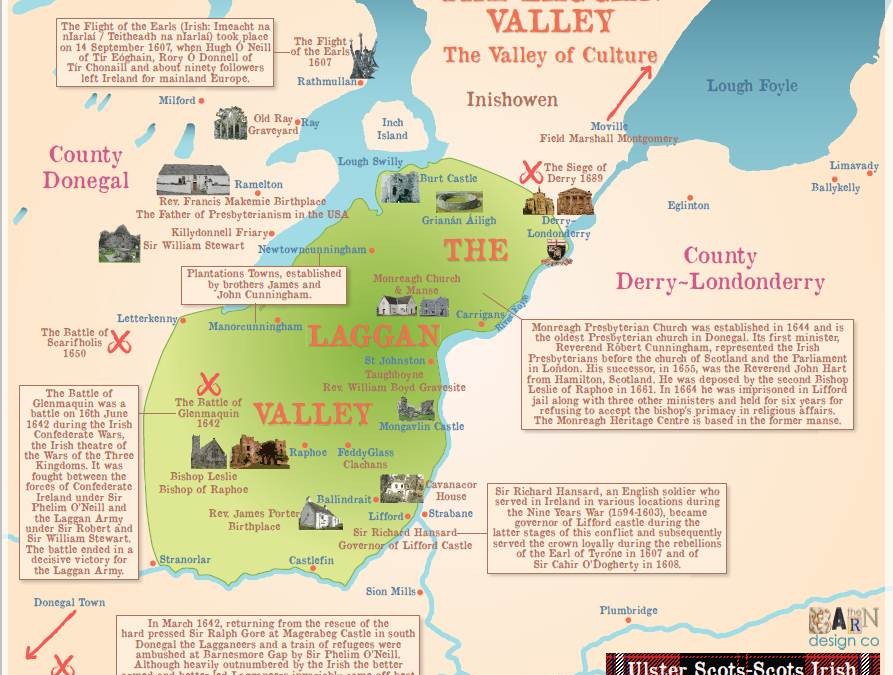
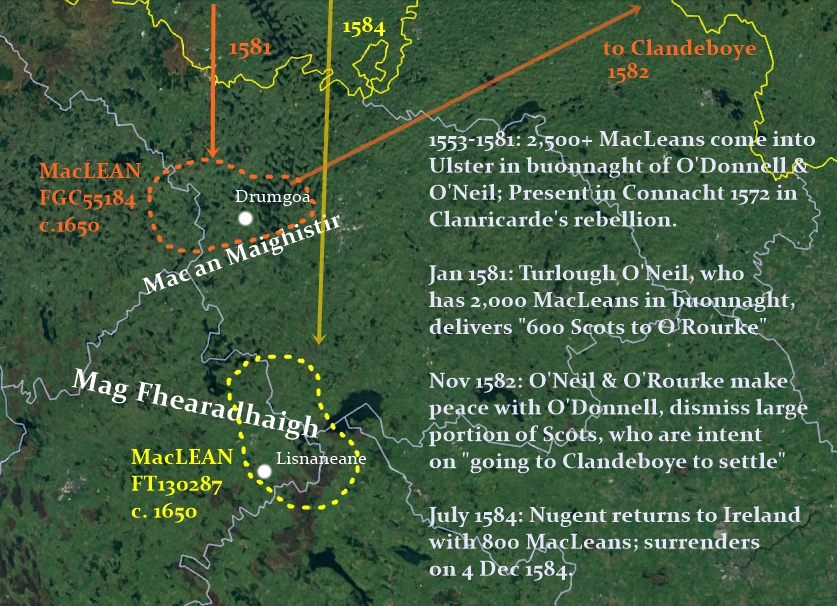
Back to the Laggan lol- I didn't realize there was a second "Laggan", but in terms of the redshanks, it was the valley around the River Foyle. The galleys full of mercenaries would either pull up to Carrigans on the O'Donnell side, or an opposite eastern bank for O'Neil. The redshank population here seems to have been made a part of the plantation scheme, it seems particularly for Maclean & Campbell- their chieftains during the redshank era were Presbyterians educated in Edinburgh and married into lowland gentry families; they probably pressed the reformed faith in the isles c. 1550s-1600. It seems the redshanks descendants made up a bulk of the Settler Army in the 1640s who were fighting Irish confederates, and were also besieged in the first Siege of Londonderry 1643-44. The redshanks were certainly an interesting and flexible group of people who were essentially loyal to no one and advanced their own interests.
In terms of Clandeboye, I meant the O'Neill lordship in East Ulster. "Macleans of Clandeboye & the Dufferin" were referenced in 1599.
- There was also a large Neanderthal population holdout around the Iberian peninsula that lasted quite a long time after the rest of the population died out, and its a strange concidence to me that -it was a celtic stronghold prior to the migration into the british isles
-the celtic people seem to have a higher percentage of neanderthal traits (fair skin, blue eyes, red hair, stout, cold-adaptations to name a few)
-Genome-wise I carry close to 5% neanderthal, while the average individual of 100% N. European ancestry has 1%, so Ive wondered if during the Bronze age, the celtic people that were pushed to the western coast of Europe had absorbed whatever people that earlier had absorbed the Neanderthals. Maybe it's just an oddity with me as opposed to the whole Irish diaspora.
Back to the Laggan lol- I didn't realize there was a second "Laggan", but in terms of the redshanks, it was the valley around the River Foyle. The galleys full of mercenaries would either pull up to Carrigans on the O'Donnell side, or an opposite eastern bank for O'Neil. The redshank population here seems to have been made a part of the plantation scheme, it seems particularly for Maclean & Campbell- their chieftains during the redshank era were Presbyterians educated in Edinburgh and married into lowland gentry families; they probably pressed the reformed faith in the isles c. 1550s-1600. It seems the redshanks descendants made up a bulk of the Settler Army in the 1640s who were fighting Irish confederates, and were also besieged in the first Siege of Londonderry 1643-44. The redshanks were certainly an interesting and flexible group of people who were essentially loyal to no one and advanced their own interests.
In terms of Clandeboye, I meant the O'Neill lordship in East Ulster. "Macleans of Clandeboye & the Dufferin" were referenced in 1599.

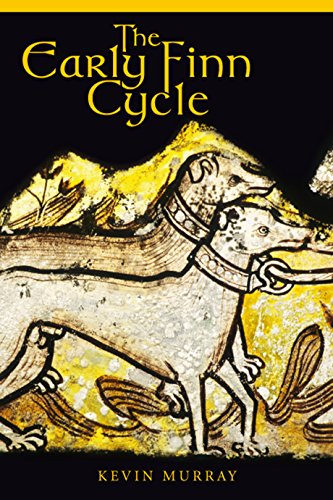 On amazon if anyone is interested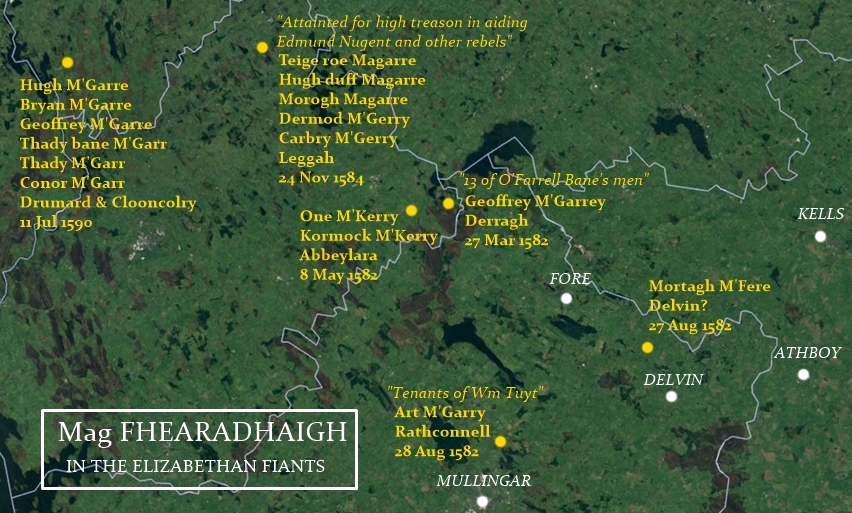
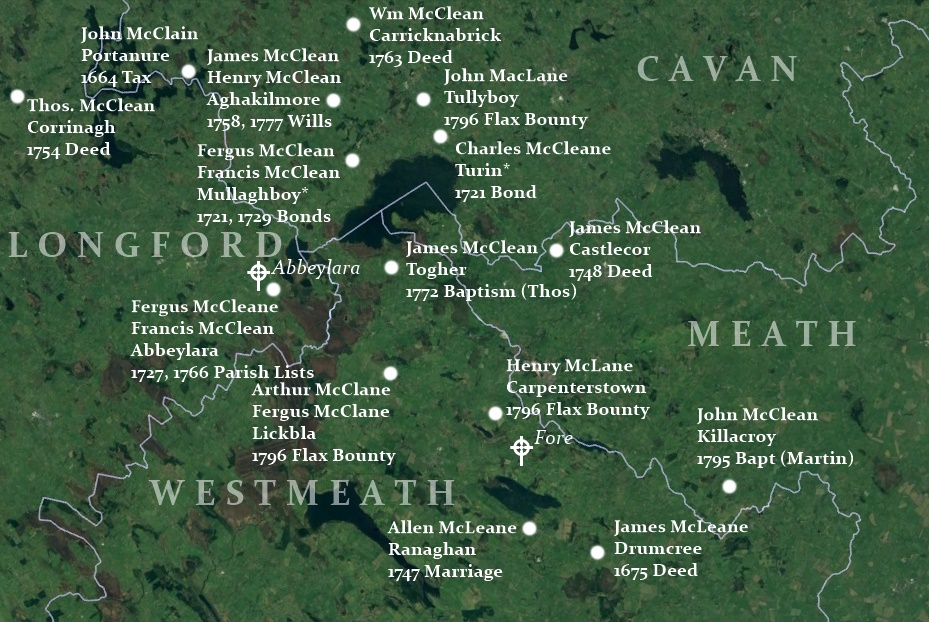
 Will the real Síl Muiredaig and Cland Cathail please stand up? So don't feel you are alone out in left field with the R1b-A5902+ Uí Briúin Bréifne. Our whole damn family left us a genealogical mess.